Sunday, August 30, 2015

A Word about Mistakes

In our pursuit of developing a skill, one key principle must be kept constantly in mind.  

Mistakes will be made.  

Some people will want to change that terminology for fear it sounds like a self-fulfilling prophecy.  They will change the terminology to misjudgment, or some other softer word.  The truth remains, we make mistakes.

However – always, always remember this.


“You make mistake; 
mistakes don’t make you.”
~Maxwell Maltz

That is one of the most significant mindsets one could ever hang onto.  Whether you practice music, medicine, golf, writing, or mountain climbing, you will need to come to grips with this principle. 

And if you make a mistake?  Well, in the words of the great song writing team of Jerome Kern and Dorothy Fields, here is some great advice.


Now you have one more key toward the development of your skill and your life goal.

Happy practicing!


Michael Biggs
Steps and Skips
Tips for the Developing Student


Sunday, August 23, 2015

Smart Verses Dumb

The “how’ of motivation and encouragement is a matter of using the right words and focus.

We all want smart kids and grand-kids.  However, we think we are doing a good thing when telling them “you are so smart”. 
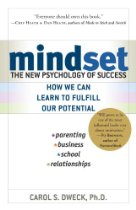
Consider this thought from Carol Dweck, author of Mindset, the New Psychology of Success.

“After seven experiments with hundreds of children, we had some of the clearest findings I’ve ever seen: Praising children’s intelligence harms their motivation and it harms their performance. How can that be? Don’t children love to be praised?”

Yes, children love praise. And they especially love to be praised for their intelligence and talent. It really does give them a boost, a special glow—but only for the moment.

The minute they hit a snag, their confidence goes out the window and their motivation hits rock bottom. If success means they’re smart, then failure means they’re dumb. That’s the fixed mindset.”

Carol promotes the idea of “you tried your best.  You did good work. 
I like that a lot.  It is recognition for the effort made, and now let’s see if we can find out where we got off track and fix that.

That takes the smart/dumb equation out of the mix entirely.  It is now down to a good/better solution than we first thought.

Consider that as an educator/coach/parent.


Michael Biggs
Steps and Skips
Tips for the Developing Student

Tuesday, August 18, 2015

The Art of Engraving

One of the great techniques for developing any skill is this one.  We have to engrave the skill so intensely onto our brains and into our muscles that it becomes second nature.  Even as I type these words my fingers are flying over these keys because of the many years I’ve spent at a computer keyboard. 

Daniel Coyle wrote an amazing little book called The Little Book of Talent.  Here is what Daniel says about engraving.

The key to effective engraving
is to create an intense connection:
to watch and listen so closely
that you can imagine the feeling
of performing the skill.

NASA astronauts and pilots in training call this simulation.  You simulate as closely as possible to the real experience until you get it right over and over again.

Denis Waitley, famed psychologist and inspiration speaker and writer says this: 

“The human brain cannot tell the difference between a real and an imagined experience.”

Are you watching your skill?
Are you concentrating on your skill?

Then you are on a good track toward better skill development.


Michael Biggs
Steps and Skips
Tips for the Developing Student


Friday, August 14, 2015

A Few Words about Practice Habits


“Practice begins 
when you get it right.”
~Daniel Coyle

And the way to get it right is to go slowly enough to get it right.  Build the muscle memory first, and then add the speed.

This is so easy to say yet so difficult for inexperienced students to understand.  And it applies to all of life.

When in learning mode, go slow enough to get the basics down solidly, and then build the skill.

That is all.


Michael Biggs
Steps and Skips
Tips for the Developing Student


Tuesday, November 11, 2014

Replay Is a Good Thing

With the abundance of smart phones with highly advanced cameras the ability to capture life’s moments is at our fingertips.  When we consider skill development in relationship with this tool, we add value to life’s future moments.

As a learning tool, replaying a performance becomes a huge impetus for growth.  Not only does the performer note their brilliant moments, there are a few cringe moments when the performance could have been improved, and in their minds, the great students are already replaying those moments to perfection.  This is true in sports, music, speaking and any other activity when we watch ourselves perform.

Your younger students will need a gentle guiding hand to fully grasp this idea, and in time, as we look back, we enjoy to growth that have happened.


Replay is a very good think.


Carolyn Biggs
Steps and Skips
Tips for the Developing Student


Sunday, October 26, 2014

High Quality Repetition

If you are attempting to be better in any area of life, then I have a great tip for you.  Here it is.

Be sure you do enough high quality repetitions.  Ten high quality repetitions are far better than 100 haphazard ones.  

The old adage “perfect practice makes perfect” is at play in this philosophy. 

It works in sports, music, relationships, and in all other areas of life.


Daniel Coyle says this:  Deep practice is not measured in minutes or hours, but in the number of high-quality reaches and repetitions you make – basically, how many new connections you form in your brain.
~Daniel Coyle – The Little Book of Talent


So, put aside your watch.  You are measuring your effectiveness by how many minutes you practice a skill.

Rather, measure how many times you get it right.  Professional golfers are notorious for being tenacious about perfecting a swing.  They avoid practicing a bad swing.  They want to practice a great swing. 

Your new chant – Perfect practice makes perfect.


Carolyn Biggs
Steps and Skips
Tips for the Developing Student